Rec. 2020 — where it appears
Named by 3 essays across 2 fields — each of them below, with the objects they name alongside it.
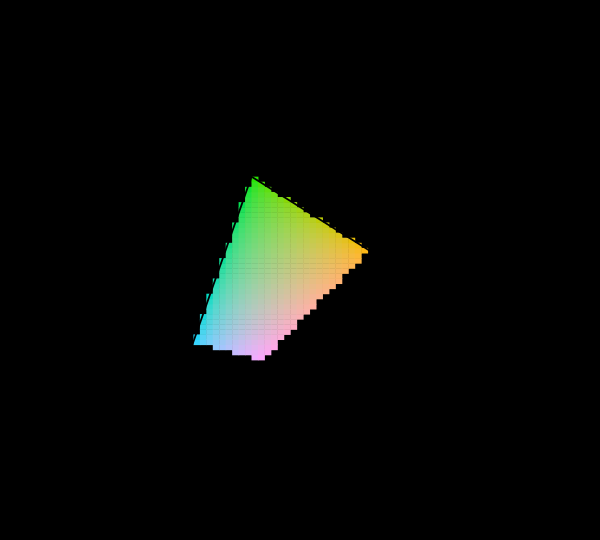
What a gamut costs
Three primaries reach a triangle and the visible region is not a triangle, so something has to give. Widening the primaries helps, has a price in precision and compatibility, and runs into a limit that is geometric rather than technological.

The triangle is a shadow
A display's gamut is drawn as a triangle on the chromaticity diagram, and coverage is quoted as a percentage of that triangle's area. Chromaticity has luminance divided out, so the triangle is a projection along the axis the eye cares most about — and the ratios computed on the solid are not the ratios computed on its shadow.
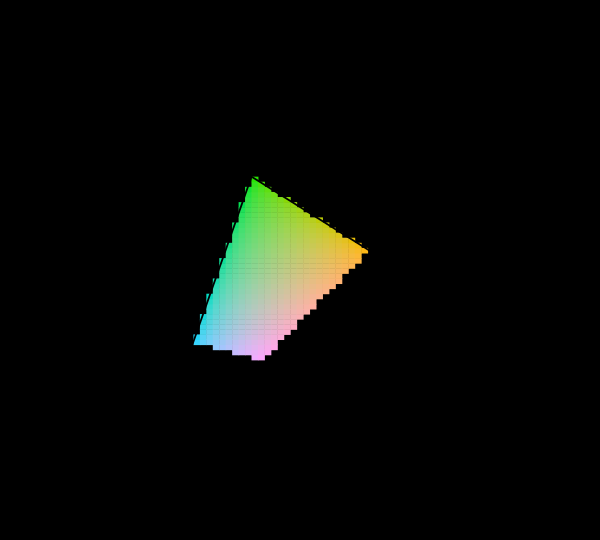
Six numbers make a space
An RGB colour space is eight numbers — three primary chromaticities, a white point, and a transfer function — and everything else about it is derived. Deriving it rather than copying the matrix is the difference between having a colour space and having a table somebody else computed.
Named alongside it
The objects these essays reach for when they reach for this one.
Display P3GamutPrimariesChromaticityDisplay gamutGamut mappingWhite pointCIELABColour managementColour spaceLuminanceSpectral locus