Concept
Hering's opponent theory — where it appears
The nineteenth-century account of colour vision as three opponent pairs rather than three independent channels, which explains why no colour is reddish green. It was long treated as a rival to trichromacy and turned out to describe the stage after it.
Named by 2 essays across 2 fields — each of them below, with the objects they name alongside it.
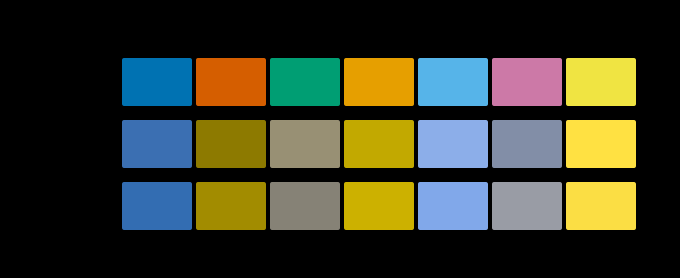
Three cones, two axes
The retina does not send three receptor signals down the optic nerve. It sends a sum and two differences, and the reason falls out of the statistics of natural light rather than out of anything the eye intended.
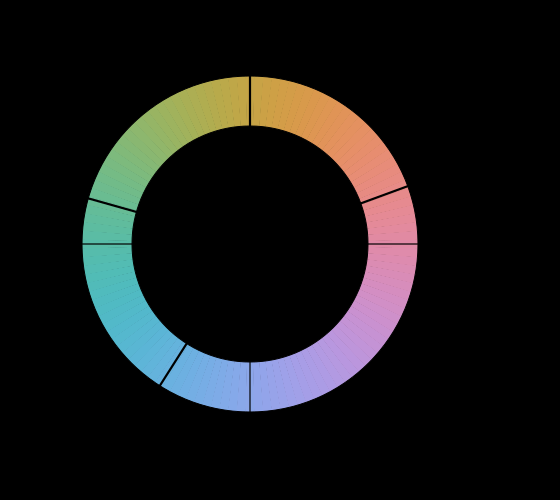
Why there are four unique hues
Observers agree that four hues are elementary and that no colour is reddish green. Nothing in the three receptors predicts either fact, and the axes of every standard colour space miss the four by tens of degrees.
Named alongside it
The objects these essays reach for when they reach for this one.
CIELABOpponent processingUnique huesCIECAM16Cone correlationDecorrelationEfficient codingElementary coloursHue quadratureLightnessNamingReflectance