Deuteranopia — where it appears
Named by 3 essays across 2 fields — each of them below, with the objects they name alongside it.
Also named here as tritanopia — the same set of essays touches all of them, so they are one junction rather than several.
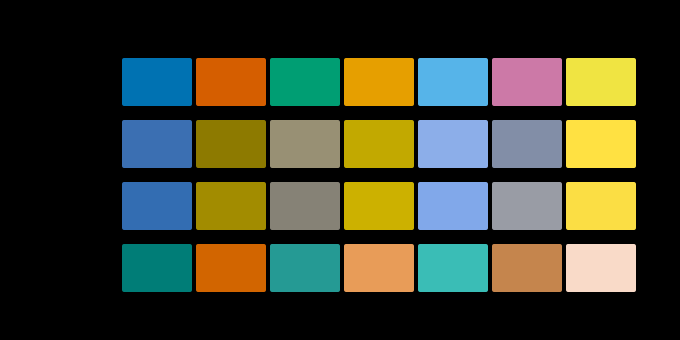
Simulating what cannot be simulated
A colour-blindness simulation cannot show what anybody sees. What it can show is which discriminations survive, and that is a narrower claim, a checkable one, and the only one worth making.

A confusion point is a missing pigment
The nine numbers colour matching leaves free are fixed by three points on a chromaticity diagram, each of them the place where everything one class of dichromat cannot tell apart converges. Two of the three lie outside the diagram entirely, which is not a defect — a direction in tristimulus space need not correspond to a light.

A point about the pigments that remain
The chromaticity at which a protanope's confusion lines meet does not move at all when the long-wave pigment moves — not slightly, exactly not at all. It moves a great deal when the medium-wave pigment does. A dichromat's confusion point is a fact about the two receptors they have rather than about the one they lack.
Named alongside it
The objects these essays reach for when they reach for this one.
DichromacyProtanopiaTritanopiaColour vision deficiencyCone fundamentalsAssertionBasisChromaticityConfusion lineConfusion pointCopunctal pointDegrees of freedom